Maputo, October 2024
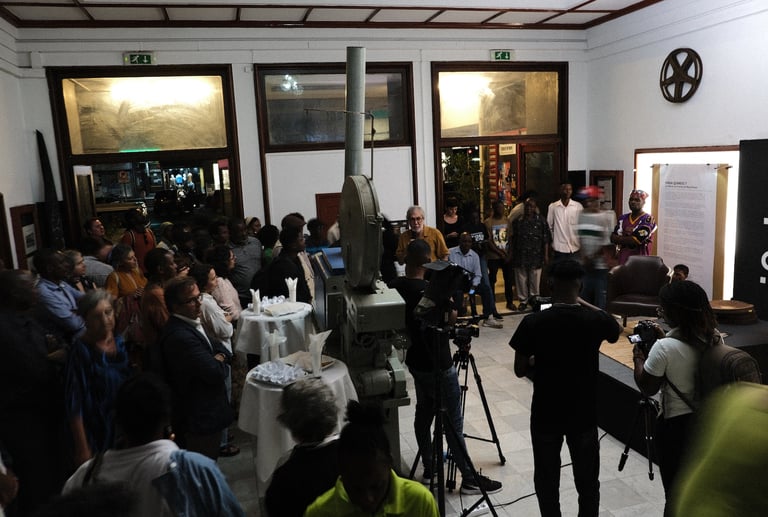
The first workshop activating the Mozambican footage filmed by Dragutin Popovic, took place in Maputo in November 2024. It was held at the historic Scala Cinema during a period of violent post-election turmoil in which the hold on power of FRELIMO — the liberation movement turned ruling party — was being challenged for the first time in the fifty years since Mozambican independence. Against a backdrop of general strikes and street protests, the workshop became an electrified forum in which a generation of young, vocal Mozambicans brought their lucid and critical readings of FRELIMO-era archival footage to bear in the presence of FRELIMO elders — some of whom appeared in the very archives being screened. The encounter crystallised what these workshops make possible at their most charged: an intergenerational confrontation with images long held in silence, transformed into a living space for reinterpreting the past and reimagining the present.
Excerpt from the Maputo workshop [3-mins]
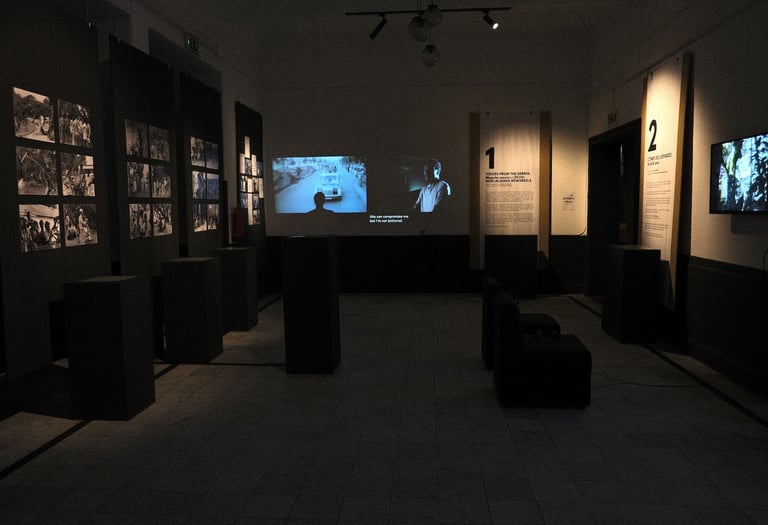
2-channel video installation, in Portuguese with English subititles, 20 minutes, 2025.
Maputo, October 2025
Encontros do Património Audiovisual
In October 2025, the Cine-Teatro Scala became the site of a second chapter of the Maputo encounter, as part of the 3rd Encontros do Património Audiovisual (27–31 October), organised by the AAMCM — Associação Amigos do Museu do Cinema em Moçambique — to mark both the International Audiovisual Heritage Day and the 50th anniversary of independence across the PALOP countries. The video installation Voices from the Debris: Maputo Session (2024), crafted from the materials of the 2024 Silent Screening Workshop, was presented at the Scala as part of a larger exhibition curated by Diana Manhiça, contextualised alongside archival documents and photographic works. The opening brought together the original workshop participants in an extraordinary reunion — a community that had formed around a shared encounter with silenced images now gathered to see their voices reflected back at them in the space where it had all begun. That electricity sparked a second workshop, História Oral Não-Alinhados, held on 30 October at the Scala, as participants who had been moved by the installation wanted to continue the conversation and welcome new voices into the room. What had begun as a single day of collective re-reading had grown into something ongoing — a living process rooted in a place, and in the people who had chosen to claim these archives as their own.